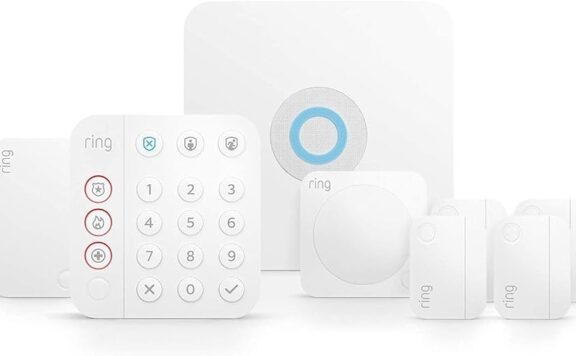
An extreme-heat security plan must protect people first and keep alarms, access, and communication dependable without assuming every camera, battery, router, or automation will tolerate the temperature. Apple Home can help report status and coordinate low-risk actions. It does not replace official heat warnings, cooling plans, medical advice, code-required life safety, equipment operating limits, or emergency services.
Extreme-heat security plan at a glance
| Risk | Security job | What to verify |
|---|---|---|
| Utility demand or outage | Local alarm, communication, safe access, essential network, and orderly shutdown | Actual runtime, battery health, UPS load, cellular path, restart order, and cooling location |
| Outdoor heat and sun | Keep cameras, doorbells, locks, sensors, and power supplies within exact limits | Operating range, direct-sun exposure, enclosure, ventilation, cable, mount, shade, and warranty |
| Hot garage, attic, shed, or car | Avoid placing consumer electronics or batteries in unsafe spaces | Measured temperature, device rating, charger location, airflow, humidity, and fire guidance |
| Door and gate movement | Preserve egress and reliable local entry | Warping, swelling, latch and bolt travel, keypad, key, inside release, contact gap, and jam alert |
| Household leaves for cooling | Simple arming, trusted access, privacy, pets, and recovery | Official advice, keys, named codes, alert owner, indoor camera rules, local contact, and old-user removal |
1. Follow official heat guidance before smart-home routines
Use local weather and emergency-management alerts for heat warnings, cooling centres, outages, and public-safety actions. The Ready.gov extreme-heat guide covers preparation and protective action. Do not stay in a dangerous home to keep security equipment online.
Write household contacts, cooling locations, medication and pet plans, utility numbers, keys, alarm instructions, and an out-of-area contact on paper. Decide who can check the property only when travel and entry are safe.
2. Record operating limits for every device
List the alarm hub, Apple home hub, modem, router, access points, bridges, Thread border routers, contacts, motion sensors, sirens, cameras, doorbells, locks, keypads, recorders, switches, power supplies, UPS units, and batteries. Record each exact model’s operating and storage temperature, humidity range, indoor or outdoor rating, power requirement, battery type, warranty, and owner.
Do not assume an “outdoor” rating covers direct afternoon sun, a sealed metal box, a parked vehicle, or an attic. Measure the location at the hottest hour. Move equipment only as the maker and building rules allow; do not block ventilation or improvise an enclosure that traps more heat.
3. Keep direct alarm functions separate
Test every exterior contact, accessible window, keypad, siren, tamper, motion zone, and approved panic path. Confirm what continues when broadband and Apple Home are unavailable. Heat can weaken adhesive, shift frames, shorten battery life, and change sensor gaps.
Abode is one Apple Home-compatible sensor-led alarm path to compare. Review the Smart Security Kit and current plans, then verify the exact hub, sensors, local siren, backup battery, communication, monitoring, Apple Home functions, and temperature limits.
4. Test cameras and doorbells in their hottest condition
Check direct sun, reflected heat, soffit or wall temperature, airflow, power supply, cable entry, mount, wireless signal, night detail, timestamps, storage, overwrite, and export. Battery cameras and doorbells may reduce performance, stop charging, or shut down outside their approved range. Follow the exact manual rather than forcing a charge or cooling a hot battery abruptly.
Walk the approach when conditions are safe. Save the first useful frame, then check notification delay, clip gaps, audio, local or cloud recording, live view, and restoration after the device cools. A camera outage should not remove direct entry detection.
5. Check locks, doors, gates, and egress
Heat can shift a door, gate, strike, or frame. The bolt should extend without lifting or pulling. Test smart control, keypad, key, inside release, battery warning, and separate contact state. Do not create an automation that locks a person out of cooling or blocks emergency exit.
For a trusted neighbour, carer, or property manager, use a named and time-limited method when lawful. Keep a tested mechanical fallback and remove temporary access after the heat event.
6. Prioritize power and safe battery handling
Measure actual load and runtime for the alarm hub, communication equipment, modem, router, Apple home hub, essential bridge, and minimum recording path. A UPS can keep essential low-power equipment running, but its battery also has temperature and ventilation limits. Put equipment where its manual allows and where household cooling does not depend on it.
Use listed batteries, chargers, UPS units, generators, and extension equipment exactly as instructed. Never charge a swollen, leaking, damaged, or abnormally hot battery. Keep generators outdoors at a safe distance and never backfeed a building. Record shutdown and restart order.
7. Apple Home roles, alerts, and automations
Apple’s home hub guidance explains the home-hub role. Verify each exact accessory, bridge, home hub, vendor app, plan, remote-access path, and household permission. Use separate accounts and MFA.
A safe routine can report a device offline, turn on approved lighting, or remind a person to check a door. Do not use a consumer temperature sensor as a medical, fire, battery-safety, or utility-control device unless the exact product is designed and approved for that job.
Failure tests during safe conditions
| Failure | What to prove |
|---|---|
| Internet unavailable | Local sensors, siren, keypad and key, recording, backup communication, monitoring, and restoration |
| AC power loss | Alarm, network, home hub, bridge, recorder, runtime, low-battery warnings, shutdown, and restart |
| Home hub overheats or stops | Alarm independence, vendor controls, local entry, camera behavior, automations, and recovery |
| Camera exceeds operating range | Fault visibility, safe shutdown, coverage gap, alternative evidence, cooling, and retest |
| Door or gate binds | Inside release, key, keypad, bolt travel, contact state, repair, and disabled unsafe automation |
| Primary phone unavailable | Key or keypad, second administrator, paper contacts, MFA, old-device removal, and recovery |
45-minute extreme-heat security test
- Record the hottest measured location and exact operating range for every essential device.
- Trigger every approved entry sensor and verify local warning, app event, selected provider path, and restoration.
- Test every key, keypad, lock, door, and gate without blocking egress.
- Walk camera views when safe; export one clip and check heat-related faults or charging limits.
- Disconnect internet and document every local and remote function that changes.
- Test safe AC loss, record real runtime, and follow the planned shutdown and restart order.
- Remove a test user and prove old Home, vendor, alarm, lock, camera, and voice access fails.
- Run the household cooling-location plan with the primary phone unavailable.
Verdict
Build heat resilience around official guidance, safe cooling, direct local alarms, keys and keypads, measured equipment limits, backup communication, and tested runtime. Use Apple Home for status and low-risk coordination. Never put a person or unsafe battery at risk to keep a camera online.
FAQ
Can heat damage security cameras or smart locks?
Yes. Check the exact model’s operating and storage limits, direct-sun exposure, battery guidance, ventilation, and warranty.
Will HomeKit work during a heat-related outage?
Some local functions may continue, but remote access, alerts, automations, recording, and vendor services vary. Test the exact setup offline.
Should I put a router or alarm hub in a garage or attic?
Only when the measured location stays within the exact equipment limits and meets power, ventilation, moisture, access, and safety requirements.
What gets backup power first?
Prioritize local alarm, communication, safe access, essential network equipment, and the minimum useful recording path.
Run extreme-heat security as seven owned operating phases
A heat plan needs more than a list of temperature ratings. It needs a trigger, an owner, a safe action, a fallback, and a record for each phase. Keep official heat guidance, household health, cooling, and emergency action ahead of cameras, automations, and uptime.
| Phase | Trigger | Owner | Proof to keep |
|---|---|---|---|
| Season setup | Before the first forecast heat event | Household safety owner | Device limits, contacts, cooling routes, access list, and test dates |
| Heat watch | Official forecast or measured location approaches a device limit | Equipment owner | Temperature log, moved equipment, disabled routines, and open faults |
| Heat warning | Official warning or unsafe indoor condition | Household response owner | People and pet status, cooling decision, alarm state, keys, and contacts |
| Grid strain | Utility warning, voltage issue, or unstable power | Power owner | UPS load, runtime, shutdown order, communication path, and restart order |
| Outage | AC or broadband unavailable | Alarm and network owners | Local alarm, access, communication, recording, and outage test log |
| Cooling absence | Household leaves for a safer location | Access administrator | Arm state, named access, camera privacy, pets, response contacts, and return rule |
| Recovery | Official and household conditions are safe | System owner | Inspection, ordered restart, event export, repairs, and retest |
Use one heat-security control sheet
Record every alarm hub, keypad, contact, motion sensor, siren, camera, doorbell, smart lock, bridge, Apple home hub, router, access point, recorder, power supply, UPS, and battery. Add the exact model, location, direct-sun exposure, measured hottest temperature, maker operating range, humidity range, power source, battery type, ventilation rule, account owner, backup owner, normal state, and next test date.
Use separate columns for the source device, vendor app, alarm app, and Apple Home state. Apple Home can report a bridge or accessory as unavailable while the direct alarm path remains active. The reverse can also happen: a tile may look normal even though the camera is not recording or a door contact is outside its useful gap. The sheet must say which record owns each decision.
List every dependency in order: utility power, UPS, modem, router, network switch, access point, Apple home hub, bridge, alarm hub, camera service, monitoring path, and phone. Add the safe shutdown and restart sequence. The HomeKit home-hub redundancy guide helps separate Apple Home recovery from alarm and vendor recovery.
Measure the location, not just the weather report
Outdoor temperature does not describe a sun-facing wall, enclosed porch, metal gate, garage ceiling, attic shelf, parked vehicle, sealed cabinet, or poorly ventilated network closet. Measure the device location during its hottest normal period with an appropriate instrument. Record shade, reflected sun, airflow, wall material, charging state, and nearby heat sources.
Do not improvise insulation, shade, fans, chargers, or enclosures that conflict with the product instructions or trap heat. A device moved into shade may lose its useful field of view or wireless path. A router moved for cooling may leave an exterior sensor or camera out of range. Treat every move as a change that needs a new coverage, privacy, power, and radio test.
Escalate a device that exceeds its listed range, smells unusual, swells, leaks, becomes abnormally hot, or reports a battery fault. Follow maker and local fire guidance. Do not handle or charge a damaged battery merely to restore a security feature.
Keep the direct alarm independent from heat routines
Heat-related automations can turn on approved lighting, report a device fault, or remind an owner to inspect a door. They should not decide that a house is safe, control medical cooling, silence a life-safety alarm, block egress, or replace official warnings.
Test each exterior contact, accessible window, motion route, keypad, siren, tamper state, and approved alarm test path without Apple Home. Record entry delay, arm state, local warning, household notification, selected monitoring step, reset, and restoration. Heat can soften adhesive, shift frames, reduce battery life, and change wireless range.
Use the alert escalation checklist to name the first recipient, backup recipient, verification step, response time, emergency threshold, and closeout record. A “device offline” alert needs a different action from a confirmed door alarm or a household heat emergency.
Test cameras, batteries, and evidence at the hottest safe point
For each camera or doorbell, record the model, hottest measured location, power source, charger, cable, mount, network path, detection zones, recording trigger, storage route, retention, viewers, and export owner. Check the first useful frame, faces, direction of travel, night detail, timestamp, audio rule, notification delay, clip gaps, and restoration after a safe shutdown.
Export one controlled test clip using the HomeKit camera evidence checklist. Confirm local time, time zone, playback on a second device, original file, and the account that can retrieve it. A live view is not enough if recording stops during heat or the clip cannot be exported later.
Record battery behavior separately from camera behavior. Note low-battery warnings, charging restrictions, safe charging location, spare policy, replacement date, and disposal route. Never cool a hot battery abruptly or place it in a freezer. Follow the exact product instructions.
Protect access when doors and gates move in heat
Inspect the slab, frame, hinges, latch, bolt, strike, gate track, closer, and sensor gap. The bolt should extend without lifting, pulling, or pushing. Test the physical door, separate contact, lock state, keypad, key, inside release, battery warning, jam warning, and emergency exit.
Do not let geofencing or a weak presence signal unlock an exterior opening. Do not auto-lock a door that binds, blocks a cooling route, or prevents a carer or responder from entering under the household plan. Repair fit before relying on motorized locking.
If the household leaves for cooling, give a named and time-limited method to an approved neighbour, carer, tradesperson, or property manager. Record who can disarm and what they may view. Remove access with the temporary-access closeout checklist after the event.
Allocate backup power by safety job
Measure actual load and runtime; do not copy the number printed on a UPS carton. Prioritize local alarm sensing and warning, safe access, essential communication, the minimum network needed for the chosen response path, and only the recording needed for the stated risk. Household cooling and medical needs outrank security-device uptime.
| Load | Question to answer | Failure action |
|---|---|---|
| Alarm hub and siren | How long do direct zones and local warning work? | Use the paper contact and manual response plan |
| Modem and router | Does the service still have an upstream connection? | Do not waste backup power on a network with no useful path |
| Apple home hub and bridges | Which local automations and status views continue? | Use direct alarm, vendor, key, and keypad controls |
| Cameras or recorder | Which views and storage paths are essential? | Preserve priority coverage and document the gap |
| Phone charging | Can both the primary and backup owners communicate? | Use the written meeting point and out-of-area contact |
Keep UPS units and chargers within their own temperature and ventilation limits. Generators belong outdoors at a safe distance and must be used exactly as instructed. Never backfeed a building or run fuel-burning equipment in a garage, shed, porch, or occupied space.
Run a 90-minute extreme-heat security exercise
- Minutes 0–10: compare official heat guidance with the household cooling, medication, pet, communication, and emergency plan.
- Minutes 10–20: measure the hottest relevant locations and compare them with exact device, battery, charger, UPS, and power-supply limits.
- Minutes 20–35: trigger direct contacts, motion routes, keypad controls, siren, user alerts, and the selected provider path in approved test mode.
- Minutes 35–45: inspect and test every heat-affected door, gate, lock, contact gap, keypad, key, inside release, and temporary user.
- Minutes 45–55: walk priority camera approaches in safe conditions, check recording and faults, and export one correctly timed clip.
- Minutes 55–70: disconnect internet safely. Record alarm, access, Apple Home, vendor, camera, recording, monitoring, and recovery behavior.
- Minutes 70–80: test safe AC loss, measure runtime under normal load, perform the documented shutdown, and restore in order.
- Minutes 80–90: run the cooling-absence and return handoff with the primary phone unavailable. Record failures, owners, correction dates, and retests in an incident timeline.
Do not approve the heat plan until these blockers are cleared
- A person, pet, medication, or cooling need depends on keeping security equipment online.
- The hottest device locations have not been measured and compared with exact operating limits.
- A swollen, leaking, damaged, or abnormally hot battery remains installed or charging.
- A camera, doorbell, lock, hub, router, UPS, or charger sits in direct sun or an enclosure its instructions do not allow.
- The alarm depends on Apple Home, a camera motion event, or a cloud routine instead of a direct supported signal path.
- A door or gate binds, the bolt does not travel freely, or emergency egress is unclear.
- Backup runtime is estimated rather than measured under normal load.
- Only one person can enter, disarm, recover accounts, or contact the selected response service.
- Temporary users and camera viewers remain active after the heat event.
- No one owns the outage record, evidence export, repair list, ordered restart, and retest.
Decision rule: approve each device only when its hottest location stays within documented limits and its safety job has a direct signal, named owner, safe action, fallback, record, and retest. Turn off or remove a failing convenience feature before it creates a larger heat, battery, access, or privacy problem.