Your Smart Home Is Watching You — Here Is Exactly What Each Device Collects
Smart speakers, cameras, doorbells, locks, and thermostats all collect data. Some store it locally. Most upload it to company servers. And a few share it with third parties you have never heard of.
This guide breaks down exactly what each type of smart home device collects, which companies have the worst track records, and the specific settings you should change today.
What Each Smart Home Device Collects
| Device Type | Data Collected | Where It Goes | Retention Period |
|---|---|---|---|
| Smart Speakers (Alexa, Google, Siri) | Voice recordings, search queries, routines, music history | Amazon/Google/Apple cloud servers | Until you delete (Amazon default), 3-18 months (Google), not stored after processing (Apple) |
| Security Cameras (Ring, Nest, Arlo) | Video/audio footage, motion events, face data (if enabled) | AWS (Ring), Google Cloud (Nest), Arlo servers | 30-180 days depending on plan |
| Video Doorbells | Every person who approaches your door, timestamps, audio | Same as camera provider | 30-180 days |
| Smart Locks (August, Yale, Schlage) | Who unlocked, when, which code/method, auto-lock events | Manufacturer cloud + hub platform | Varies — some local only |
| Thermostats (Nest, Ecobee) | Occupancy patterns, temperature preferences, home/away schedule | Google (Nest), Ecobee servers | Indefinite |
| Robot Vacuums (Roomba, Roborock) | Floor plan of your home, room dimensions, furniture layout, cleaning schedule | iRobot/Roborock cloud | Until deleted |
The Companies With the Worst Privacy Records
Ring (Amazon) — Police Data Sharing
Ring gave police access to doorbell footage without warrants in at least 11 cases before changing the policy in 2023. Amazon still processes Ring video on its cloud. Ring also had employee access scandals where staff viewed customer footage without authorization.
Current status (2026): End-to-end encryption now available but not on by default. You must manually enable it in the Ring app, and doing so disables some features like Alexa integration.
Eufy — The Cloud Lie
In 2022, Eufy marketed its cameras as “local storage only, no cloud.” Security researchers proved this was false — Eufy was uploading thumbnail images and facial recognition data to AWS servers without user consent. Eufy eventually admitted the issue and patched it, but the trust damage was done.
Wyze — Data Breach Cover-Up
In 2019, Wyze exposed 2.4 million customer records through an unsecured database. In 2024, a camera vulnerability let some users see other people’s footage. Both incidents were slow to be acknowledged publicly.
5 Privacy Settings to Change Right Now
| # | Setting | Where | Why |
|---|---|---|---|
| 1 | Enable end-to-end encryption | Ring app → Video Settings → E2EE | Stops Ring/Amazon from viewing your footage |
| 2 | Disable voice recording storage | Alexa app → Privacy → Review Voice History → Enable auto-delete | Amazon stores recordings indefinitely by default |
| 3 | Turn off Sidewalk | Alexa app → More → Settings → Account → Amazon Sidewalk | Stops sharing your WiFi with neighbors’ devices |
| 4 | Use local storage when possible | Eufy/Reolink NVR or microSD | Footage never leaves your home |
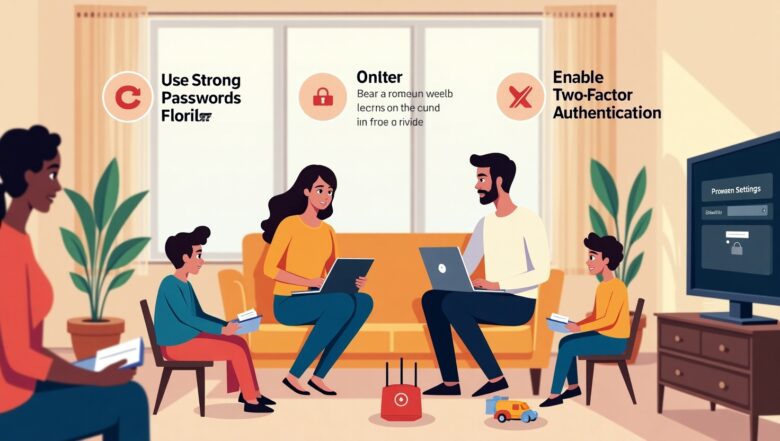
| 5 | Separate IoT WiFi network | Router settings → Guest Network or VLAN | Compromised camera cannot access your computer/phone |
Privacy Comparison by Security System (2026)
| System | Data Processing | E2E Encryption | Law Enforcement Sharing | Data Sold to 3rd Parties | Local Option |
|---|---|---|---|---|---|
| Apple HomeKit | On-device + iCloud | Yes (default) | Only with warrant | No | Yes (HomeKit Secure Video) |
| Abode | Cloud (AWS) | No | Only with warrant | No | Partial (hub works offline) |
| Ring | Cloud (AWS) | Optional | Policy changed 2023, warrant required | No (but shares with Amazon) | No |
| Google Nest | Cloud + some on-device | Partial | Only with warrant | No (but used for Google AI training) | No |
| SimpliSafe | Cloud | No | Only with warrant | No | No |
| Eufy (post-2023) | Local + optional cloud | No | N/A (local storage) | No (after 2022 scandal) | Yes |
The Best Privacy-First Smart Home Setup in 2026
If privacy is your top priority, here is the stack that keeps the most data off corporate servers:
- Hub: Apple HomePod Mini or Home Assistant (fully local)
- Cameras: Reolink or Eufy with local NVR storage — no cloud subscription needed
- Alarm: Abode (works offline, HomeKit compatible) or Home Assistant with Zigbee sensors
- Lock: Level Lock (works locally via HomeKit, no cloud account required)
- Protocol: Matter/Thread devices where available — local-first by design
Total monthly cost: $0. No subscriptions required. All processing and storage stays in your home.
FAQ
Do smart home devices listen all the time?
Smart speakers (Alexa, Google Home, Siri) listen for their wake word continuously, but only record and upload audio after hearing it. Independent tests confirm this, though Amazon and Google have both been caught retaining recordings longer than disclosed. Apple processes Siri requests on-device and does not store them.
Can police access my Ring camera without my permission?
Since 2023, Ring requires a warrant or court order for law enforcement to access footage. Before that, Ring granted police direct request access in multiple cases. If you enable end-to-end encryption, not even Ring/Amazon can access your stored video.
What is the most private security camera?
For no-cloud local storage: Reolink cameras with an NVR, or Eufy cameras with a HomeBase. For ecosystem integration with privacy: Apple HomeKit Secure Video processes footage on your Apple TV or HomePod and stores encrypted clips in iCloud that Apple cannot decrypt.
Should I put smart home devices on a separate WiFi network?
Yes. A compromised IoT device (camera, thermostat, smart plug) on your main network can be used to attack computers, phones, and NAS devices on the same network. Most routers support a guest network or VLAN — put all IoT devices there.