Why Radon Matters for Home Safety
Radon is a radioactive gas that seeps into homes through cracks in foundations, gaps around pipes, and sump pits. You cannot see it, smell it, or taste it. The EPA estimates radon causes about 21,000 lung cancer deaths per year in the US — second only to smoking.
Every home has some radon. The question is whether your levels are high enough to act on. The EPA’s action level is 4 pCi/L (picocuries per liter). Above that, you should install a mitigation system. Between 2-4 pCi/L, the EPA still recommends considering mitigation.
How Radon Gets Into Your Home
| Entry Point | Risk Level | Fix Difficulty |
|---|---|---|
| Foundation cracks | High | Moderate — sealed with polyurethane caulk |
| Gaps around pipes/wires | Medium | Easy — spray foam or caulk |
| Sump pump pit | High | Moderate — airtight sump cover ($50-150) |
| Crawl space (dirt floor) | Very high | Hard — vapor barrier + ventilation needed |
| Well water | Low-Medium | Moderate — aeration or GAC treatment |
| Construction joints | Medium | Moderate — caulk and seal |
Best Radon Detectors in 2026
There are two types: short-term test kits (charcoal canisters, 2-7 days) and continuous digital monitors. For ongoing peace of mind, a digital monitor is worth the investment.
| Device | Type | Price | Reading Speed | Smart Features | Accuracy |
|---|---|---|---|---|---|
| Airthings View Plus | Continuous | $299 | 24 hrs for first reading | WiFi, app, IFTTT, dashboard | Excellent (±10% after 7 days) |
| Airthings Wave Plus | Continuous | $229 | 24 hrs | Bluetooth + hub optional | Very good |
| Ecosense RadonEye RD200 | Continuous | $199 | 10 minutes | Bluetooth, app | Good (fast but can fluctuate) |
| Airthings Corentium Home | Continuous | $149 | 24 hrs | None (display only) | Very good |
| First Alert RD1 | Digital (plug-in) | $40-60 | 24-48 hrs | None | Fair (less precise sensor) |
| Charcoal test kit | Short-term | $15-30 | 2-7 day exposure, lab results in 1-2 weeks | None | Good (one snapshot only) |
Which Radon Detector Should You Buy?
- Best overall: Airthings View Plus ($299) — tracks radon, CO2, humidity, temperature, VOCs, and pressure. WiFi dashboard shows trends over months.
- Best value continuous: Ecosense RadonEye RD200 ($199) — fastest first reading (10 minutes). Good for quick checks or confirming mitigation worked.
- Budget pick: Charcoal test kit ($15-30) — fine for a first test. If it comes back above 4 pCi/L, follow up with a continuous monitor.
EPA Radon Action Levels
| Radon Level (pCi/L) | EPA Recommendation | What You Should Do |
|---|---|---|
| Below 2 | Low risk | No action needed. Retest every 2-5 years. |
| 2 to 4 | Consider mitigation | Worth fixing if you have a basement or spend significant time below grade. |
| 4 to 8 | Fix within a few months | Install a sub-slab depressurization system. Cost: $800-1,500 professionally installed. |
| Above 8 | Fix urgently | Get a licensed radon mitigator immediately. Limit time in affected areas until fixed. |
Radon Mitigation: What It Costs and How It Works
The most common fix is sub-slab depressurization — a pipe drilled through the basement slab connected to a fan that pulls radon from under the house and vents it above the roofline.
| Mitigation Method | Cost (Installed) | Effectiveness | Best For |
|---|---|---|---|
| Sub-slab depressurization | $800-1,500 | 95-99% reduction | Homes with basements or slab foundations |
| Crawl space membrane + fan | $1,200-2,500 | 90-95% reduction | Homes with dirt-floor crawl spaces |
| Sealing cracks alone | $200-500 | 10-50% reduction | Supplement to other methods, not standalone |
| HRV/ERV ventilation | $1,500-3,000 | 25-50% reduction | Tight homes where increased ventilation helps |
A properly installed sub-slab system typically drops radon from 8-20 pCi/L down to under 2 pCi/L. The fan uses about $50-100/year in electricity.
Radon and Smart Home Security
If you already have a smart home security hub, some radon monitors can integrate:
- Airthings + IFTTT: Trigger automations if radon spikes — turn on an exhaust fan, send an alert to your phone, or activate a security camera to check if a window was opened.
- Airthings + Alexa/Google: Ask your voice assistant for current radon levels. Useful but not as actionable as automated responses.
- Standalone monitors: The RadonEye and Corentium Home do not integrate with security systems — they are display-only or Bluetooth-only.
For a fully connected home, the Airthings View Plus is the only radon monitor that fits into a broader smart home ecosystem without workarounds.
FAQ
How long does a radon test take?
Short-term charcoal tests take 2-7 days of exposure plus 1-2 weeks for lab results. Digital monitors like the RadonEye give a first reading in 10 minutes, but the EPA recommends monitoring for at least 48 hours (ideally 90+ days) for an accurate long-term average.
Does every home have radon?
Yes — radon exists everywhere, but levels vary widely. The EPA estimates 1 in 15 US homes has radon above the 4 pCi/L action level. Certain regions (Appalachian states, Upper Midwest, Rocky Mountains) have higher concentrations due to geology. Check the EPA radon zone map for your area.
Can radon detectors connect to my home security system?
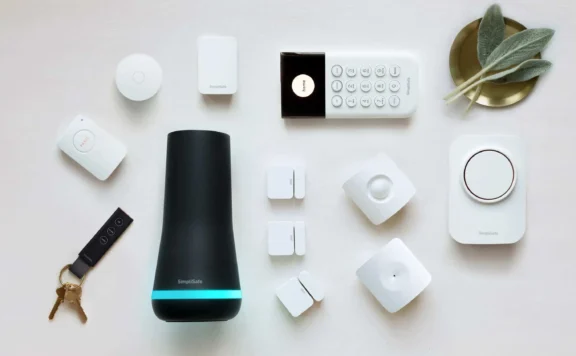
Only the Airthings line integrates with smart home platforms via WiFi, IFTTT, or Alexa/Google. No radon detector currently plugs into traditional alarm panels (like those from SimpliSafe, Ring, or Abode). This may change as Matter protocol adoption grows — see our 2026 security tech outlook.
Is radon worse in basements?
Usually yes. Radon concentration decreases as you go up — basements and ground floors have the highest levels. If you spend significant time in a basement (home office, bedroom, media room), testing that specific area is important. Upper floors in a multi-story home typically have much lower readings.