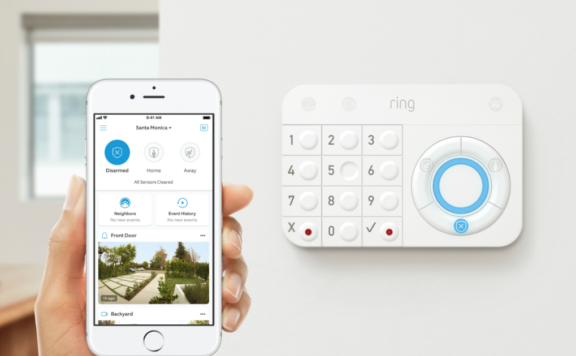
A home-security account can remain open on an old phone, a shared tablet, a browser, a technician’s test device, or a household member’s handset long after the device should have lost access. Changing the password may close some sessions, but it is not safe to assume that every vendor revokes every app token, browser cookie, voice-assistant link, or camera viewer at the same time.
This audit creates a named inventory of trusted devices and active sessions, removes access that no longer has a current owner, and proves that the remaining phones still receive alarms, camera events, lock activity, and monitoring calls. It complements the phone replacement checklist, which handles a planned handset change, and the account-compromise response checklist, which is the faster path when unauthorized access is suspected.
Trusted-device and session audit sheet
| Record | Write down | Pass condition |
|---|---|---|
| Account | Provider, service, owner email, owner role, and recovery route | One current accountable owner is named |
| Device | Phone, tablet, browser, watch, TV, speaker, or automation controller | Every device has a current person and purpose |
| Session | Device label, platform, approximate location, last activity, and sign-in method | Each session is recognized or revoked |
| Privileges | Arm/disarm, locks, live video, clips, exports, users, billing, or monitoring | Access matches the person’s present job |
| Recovery | Second factor, recovery codes, backup owner, and support route | Recovery works without an unknown device |
| Evidence | Audit date, reviewer, removals, screenshots safe to retain, and test result | The household can explain what changed |
1. Choose the safe audit state
Run a routine audit while the system is stable, a responsible adult is on site, and another approved method can control the alarm. Do not begin while an alarm incident is active, while monitoring is processing a signal, during a firmware update, or just before the household leaves. Record the starting state: armed mode, bypassed zones, open sensors, active camera privacy modes, lock state, monitoring state, and any known fault.
If the audit follows a lost device, unexpected login, password-reset message, unknown viewer, or unexplained disarm event, treat it as an incident. Preserve relevant notifications and event records first, then use the account-compromise workflow. A routine cleanup should not overwrite the evidence needed to explain a suspected intrusion.
- Name one audit owner and one backup person.
- Keep a verified local way to enter and secure the property.
- Confirm the owner can reach the official support channel.
- Set a stop time. Do not leave the system half-audited overnight.
- Record any vendor page that does not expose sessions or trusted devices.
2. Build the account map before signing anything out
Most homes have more than one security account. The alarm app may be separate from the camera app, smart-lock app, Apple Home or Google Home household, router, monitoring portal, password manager, and automation service. List them as separate control planes. A phone can disappear from the alarm app yet retain camera viewing through a shared smart-home household.
| Control plane | Look for | Risk if missed |
|---|---|---|
| Alarm | Owners, residents, PINs, mobile devices, browser sessions, monitoring contacts | Arming, disarming, or account changes remain available |
| Cameras | Viewers, shared homes, clip access, downloads, web sessions, TV apps | Live video or saved evidence remains visible |
| Locks and access | Owners, phone keys, codes, schedules, bridges, voice links | A removed phone may still unlock a door |
| Smart-home platform | Home members, hubs, assistants, linked services, automations | Indirect control survives a vendor-app cleanup |
| Network | Router administrators, remote management, VPNs, shared passwords | A former user can observe or change device connectivity |
| Recovery | Email, phone number, authenticator, passkey, recovery code, backup owner | The wrong person can regain access later |
Use the password-manager and recovery-code audit if ownership, two-factor authentication, or recovery material is unclear. Do not paste passwords, one-time codes, alarm PINs, setup QR codes, or monitoring passcodes into the audit sheet.
3. Inventory physical devices that can reach the system
Walk through the household and identify each phone, tablet, watch, laptop, desktop browser, television app, voice assistant, wall-mounted control tablet, and spare handset that can reach any control plane. Include devices that are powered off, stored in a drawer, used only for travel, or held by a former resident. A device does not become safe merely because it has not connected recently.
For each device, record a label that the household can recognize, such as “Alex iPhone 15,” “kitchen wall tablet,” or “office Chrome on MacBook.” Record the current custodian, physical location, platform, whether screen lock and device encryption are enabled, whether the operating system is supported, and the last date the device was intentionally used.
Classify every device
- Keep: current device, current owner, necessary role, and supported software.
- Reduce: device remains valid but has more rights than its job requires.
- Reverify: device is recognized but its location, owner, or last use is uncertain.
- Revoke: device is sold, lost, retired, shared outside the household, or no longer needed.
- Incident: device or session is unknown, or activity conflicts with the household’s record.
Do not use a vague “family” label. A safe record links each session to a named person, a named device, and a current reason.
4. Review sessions without trusting display names
Open the vendor’s official security, devices, login activity, or session page. Compare each entry with the physical-device inventory. Device names and approximate locations are hints, not proof. Mobile carriers, VPNs, shared IP addresses, browser privacy settings, and vendor geolocation can make a legitimate session look unfamiliar. Verify with several facts: platform, browser, last activity, sign-in method, household travel, and the person’s actual device.
Capture only what is safe and needed. A screenshot may expose email addresses, home names, device identifiers, or recovery options. Store the final audit record in a controlled location and delete temporary captures when the record is complete. Use the clipboard and screenshot privacy audit if the review requires temporary images or copied identifiers.
When a vendor does not show sessions
Record “not exposed” rather than “none.” Check its official options for signing out other devices, removing trusted devices, resetting the password, rotating app-specific credentials, reviewing household members, and contacting support. If the only available control is a global sign-out, prepare every retained device and recovery path before using it.
5. Audit roles before revoking devices
A device session and a household role are separate. Removing one phone may not remove the person’s account, lock code, camera share, smart-home membership, or monitoring contact. Review privileges by function:
- Can the person arm or disarm?
- Can the person unlock doors or create codes?
- Can the person view live cameras, recordings, or familiar faces?
- Can the person export or delete clips?
- Can the person invite users or promote administrators?
- Can the person change plans, billing, addresses, or monitoring contacts?
- Can the person alter automations, schedules, privacy modes, or notification rules?
Use the least access that supports the person’s present task. A camera-only viewer should not become an alarm administrator for convenience. A cleaner or contractor should use bounded access rather than the owner’s phone. For camera-specific removals, follow the shared-camera user audit.
6. Revoke in an order that preserves control
Do not start by removing the only working owner phone. Confirm one current owner device, one recovery route, and one safe physical-entry method first. Then process the highest-risk entries: unknown sessions, lost or sold devices, former household members, temporary service devices, shared browsers, and unsupported phones.
- Record the session or device and why it is being removed.
- Preserve evidence first if activity is suspicious.
- Remove the device session through the official control.
- Remove unneeded household roles and camera shares.
- Expire lock codes, phone keys, and temporary access tied to that person.
- Review linked smart-home services and automation accounts.
- Rotate the password only when required, then verify the owner can recover.
- Recheck the session list and event history for the expected result.
A password change is part of the response, not proof that revocation is complete. Confirm the removed device cannot reopen the app, load live video, operate a lock, or regain access through a linked platform. Never test unauthorized access by asking a former resident to try the account; use a household-owned test device or the vendor’s session controls.
7. Rebuild retained devices safely
On every retained phone, update the operating system and install the current app from the official store. Verify the publisher and app name rather than following a login link from email or text. Sign in through the official app or typed account address. Re-enable the minimum permissions required for the intended features.
Review notifications, background activity, location, Bluetooth, local-network access, microphone, photos, and camera permissions. A migration or global sign-out can silently change them. Use the home-security app permission audit to test the actual result instead of assuming that an enabled switch produces timely alerts.
Protect recovery
- Confirm the recovery email and phone number belong to current owners.
- Move authenticator access through the provider’s supported process.
- Confirm passkeys are present only on approved accounts and devices.
- Create new recovery codes when old copies may be exposed.
- Store recovery material away from the phone it is meant to recover.
- Test the backup administrator without sharing the primary password.
The backup-administrator drill covers that final handoff. A second owner should be able to receive an alert and take the approved response without using the primary owner’s unlocked phone.
8. Check linked services and indirect sessions
Security access often survives through Apple Home, Google Home, Alexa, IFTTT, a home-automation server, a voice assistant, a camera web portal, or a vendor integration token. Review linked services in both directions: the security vendor’s integrations page and the third party’s connected-app page. Remove links that have no named owner or current purpose.
Then inspect automations that can arm, disarm, unlock, change privacy mode, silence alerts, or route clips. Record the trigger, conditions, action, owner, and failure behavior. Do not recreate an integration during the audit unless the household can test it and roll it back.
9. Retire old devices after access is closed
Once the account shows the expected sessions and the retained phones pass testing, sign out of security apps on the old device. Remove downloaded clips, exported event files, setup images, saved passwords, and offline camera media according to the household’s retention rules. Remove the device from password-manager and smart-home accounts before factory reset.
If the old phone is lost or outside the household’s control, use the platform’s official lost-device process. Remote lock or erase can protect local data, but it does not replace vendor-session revocation, lock-code review, camera-share removal, or account recovery.
45-minute trusted-device acceptance test
| Minutes | Test | Pass condition |
|---|---|---|
| 0–5 | Confirm owner, backup, physical entry, armed state, open zones, and monitoring state | Safe starting state is recorded |
| 5–10 | Review the final session list and current household roles | Every retained entry has a named owner and purpose |
| 10–15 | Generate one approved door or motion event | Retained phones receive the correct event |
| 15–20 | Open one camera live view and locate the matching recording when supported | Approved viewers work; removed viewers do not appear |
| 20–25 | Test one lock or access-code event without risking lockout | Authorized access works and logs correctly |
| 25–30 | Arm and disarm through the approved local process | Alarm state and user attribution are correct |
| 30–35 | Disable Wi-Fi on one retained phone and repeat an alert check | Remote notification follows the documented path |
| 35–40 | Have the backup person receive, verify, and classify an event | Backup response works without the primary phone |
| 40–45 | Recheck sessions, monitoring state, bypasses, privacy modes, and temporary access | No unknown session, unsafe bypass, or temporary credential remains |
Stop if the owner loses access, a lock becomes unreliable, notifications disappear, a camera privacy setting changes unexpectedly, or monitoring state is unclear. Restore the last known safe state and use the official support path. Do not solve an account-control failure by creating extra owners or sharing the primary password.
Evidence and closeout
The final record should list the accounts checked, devices retained, sessions revoked, roles reduced, linked services removed, recovery paths confirmed, test events, failures, fixes, and owner sign-off. It should not contain passwords, PINs, passcodes, recovery codes, setup QR codes, or full device identifiers.
Schedule the next review after a move, phone loss, household change, support visit, suspected compromise, or major platform migration. For a stable household, a recurring quarterly check is easier than reconstructing years of unknown sessions after an incident.
Bottom line
A trusted-device audit is complete only when every session has a current owner, obsolete access is removed across direct and linked platforms, recovery belongs to the present household, and retained phones pass real alarm, camera, lock, and notification tests. A clean-looking device list without a working acceptance test is only an inventory.