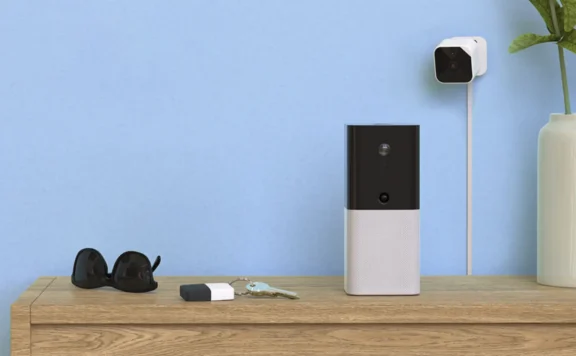
Updated August 8, 2026. A detached garage is a small security system with a hard communications problem. It may sit beyond the house Wi-Fi footprint, have an overhead door that is difficult to instrument, and hold tools or bikes that are easy to move. A no-subscription setup can work, but only after you prove three things at the installed location: the opening creates a dependable state change, that state reaches the household, and a named person knows what to do next.
This guide does not rank products from a lab test. It gives you a repeatable way to design and test a detached-garage setup without assuming that a free app tier, a camera notification, or a smart-home routine equals an alarm event or professional response.
Start with the jobs, not a product bundle
| Garage job | Primary evidence | Useful context | No-subscription response |
|---|---|---|---|
| Overhead door left open | Door-position or contact state | Camera view of the opening | Reminder, verification, then a named person closes it |
| Side door opened while away | Direct contact-sensor event | Exterior or interior camera clip/live view | Household alert, verification, then a prewritten escalation step |
| Window or service opening disturbed | Contact sensor or other direct opening state | Motion and camera evidence | Check people, pets, and authorized access before escalating |
| Movement among stored tools | Motion event after an opening event | Camera view of the storage zone | Treat motion alone as a verification prompt, not proof of intrusion |
| Power, internet, or hub failure | Offline or supervision status | Last-known device state | Use a local check or restore the failed path before relying on alerts |
The order matters. Entry state answers whether a door or window changed. A camera helps answer what happened. A light may improve visibility. None of those tools assigns a responder by itself.
Map every opening before buying hardware
Walk the garage and record each opening, how it moves, who uses it, and what a sensor can physically observe. Include the overhead door, side or rear personnel door, windows, pet doors, and any internal passage to another structure. Note metal surfaces, weather exposure, vibration, temperature swings, and places where a magnet or sensor could be struck.
| Opening | What to measure | Common failure | Acceptance evidence |
|---|---|---|---|
| Sectional overhead door | Panel travel, mounting clearance, magnet alignment, vibration | Sensor reports closed while the door is partly open | Repeat full and partial openings from every normal position |
| Roll-up door | Travel path, slat movement, protected mounting point | Hardware is damaged or shifts with repeated operation | Operate the door repeatedly and inspect the mount afterward |
| Side door | Frame gap, hinge play, weather seal, latch and strike | A loose door creates intermittent open/closed events | Close gently, close firmly, pull on the latched door, and confirm one stable state |
| Window | Sash direction, screen, condensation, usable opening | Sensor protects one position but not the opening people actually use | Test every allowed position and label any intentionally bypassed state |
For a broader physical-layer review, use the detached-garage security-system guide. If the garage is mainly storage, the storage-room security guide adds inventory, access, and handoff questions.
Separate alarm state, smart-home state, and camera evidence
A dependable design names the system of record for each event. A contact sensor enrolled directly in a security hub may be eligible to affect that hub’s alarm state. A smart-home contact exposed through another controller may only drive a routine. A camera person alert is evidence from an image-analysis system. Do not merge those labels in the household response plan.
- Direct alarm event: a device and zone the security system recognizes under the selected mode.
- Convenience state: an open/closed, motion, or lock state used for reminders and automations.
- Video evidence: a live view or saved event used to verify activity; storage and retention depend on the exact camera and plan.
- Human response: the person who checks the alert, calls an authorized user, visits the property, or contacts emergency services when appropriate.
If Apple Home is part of the design, the detached-garage Apple Home guide covers Thread, controller, camera, and outage boundaries. Treat the Apple Home state as a useful interface unless the security provider explicitly documents that exact device and event as a native alarm zone.
Prove radio and internet coverage at the final mounting points
Do not test a sensor on a workbench next to the hub and then assume it will work through exterior walls. Put the hub, router, camera, and sensor where they will stay. Close the garage door, park the usual vehicle, and repeat tests in wet, hot, and cold conditions when practical. Metal doors, foil insulation, masonry, appliances, and vehicles can change the result.
Use a two-path worksheet
| Path | Question | How to test it | Failure response |
|---|---|---|---|
| Sensor to hub/controller | Does the opening state arrive every time? | Run 20 open/close cycles with the garage in normal condition | Move hardware, change the radio path, or choose another device |
| Camera to network | Does live view start and does the event arrive? | Trigger day/night events with the door open and closed | Improve coverage, lower traffic, or use a different camera path |
| Cloud/app to phone | Does the correct household receive the alert? | Test on Wi-Fi and cellular data with focus/do-not-disturb settings reviewed | Change notification permissions and add a second responsible user |
| Local routine | What still works when internet service is unavailable? | Use a controlled outage without disabling required life-safety equipment | Document the unpaid/offline behavior and add a local fallback |
Longer-range camera links can solve a different problem from low-power opening sensors. If you are considering Abode’s long-range camera path, read the Abode Edge Camera review and confirm current hub, radio, live-view, recording, and plan requirements before treating it as the garage’s evidence layer.
Define the free state before you rely on it
“No subscription” is not a permanent feature list. Vendors can separate local alarm control, app access, automation, camera recording, clip history, cellular backup, and professional monitoring into different plans. Open the current plan page and write down what remains after a trial or paid plan ends.
| Capability | Question to answer in writing | Installed test |
|---|---|---|
| Arm/disarm | Can every authorized user change mode without a paid plan? | Test each role, including a temporary or household account |
| Opening alerts | Which sensors still create phone notifications? | Trigger each zone with the account in its actual unpaid state |
| Automations | Which schedules and rules remain active? | Run the rule, then remove internet access if local operation is claimed |
| Camera use | Is live view available, and are recordings stored anywhere? | Trigger, view, retrieve, export, and delete an event |
| Communications backup | What happens when broadband fails? | Use a controlled internet outage and record every surviving path |
| Professional response | Is any monitoring or dispatch included? | Do not create an emergency; use the provider’s documented test process |
Abode buyers can start with the current Smart Security Kit as one possible hub-and-sensor path, then compare the live Abode plans page. Verify the exact free, paid, recording, backup, and monitoring features shown for the account at purchase time. The point is not that one tier fits every garage; it is that the household knows exactly which path it owns.
Build three routines with different severity
1. Door-left-open reminder
Use a delay long enough to ignore normal loading but short enough to catch a forgotten door. The routine should say which door is open, not “garage alert.” Test partial openings because an overhead door can look closed from the house while leaving a gap.
2. Unexpected-opening response
When an opening occurs in an away or overnight mode, send a direct event to at least two responsible users. The first responder checks household presence and camera context, then follows the written escalation step. Do not ask every family member to improvise during the event.
3. Return-home lighting
A light routine can improve access and camera evidence, but keep it separate from the alarm decision. Define a short active window, a manual override, and what happens when the motion sensor or network is unavailable. The workshop security-routines guide provides a useful model for work zones, tools, and after-hours movement.
Camera placement: answer one question per view
An exterior camera may answer who approached the driveway or side door. An interior camera may show whether an overhead door opened or a person entered the tool zone. Trying to capture the street, driveway, doors, vehicles, and workbench in one wide frame often leaves every subject too small.
- Keep neighboring windows, yards, and shared paths outside the frame where possible.
- Check headlights, reflective doors, work lights, and infrared bounce at night.
- Test faces and clothing at the actual decision distance, not only near the lens.
- Review microphone use and local consent rules before enabling audio.
- Confirm who can view, download, share, and delete footage.
- Remove old users and devices after a move, contractor job, or account handoff.
Account and responder design
A no-fee system shifts more work to the household. Create separate accounts where the platform supports them instead of sharing one password. Turn on multi-factor authentication when available. Give a sitter or contractor only the access needed for the agreed time, and remove it afterward.
| Role | Needs | Should not receive by default |
|---|---|---|
| Owner/admin | Device, account, billing, retention, and user controls | No avoidable shared credential |
| Resident | Arm/disarm, relevant alerts, and clear response steps | Installer or billing control unless needed |
| Temporary helper | Time-bounded entry and only the necessary garage state | Permanent camera history or account administration |
| Local responder | Address, safe verification path, contacts, and stop rules | An expectation to enter a dangerous scene |
If your main constraint is apartment-style shared access or a detached garage attached to a rental, compare the role and permission questions in the no-subscription apartment guide.
Plan for failures before the first alert
| Failure | What may be lost | Fallback to define | Retest trigger |
|---|---|---|---|
| Garage power loss | Camera, router node, lights, opener, charging | Battery-backed opening state or a manual inspection path | After every outage or electrical change |
| Internet outage | Remote alerts, cloud recording, remote live view | Local siren/routine if supported and a local check | After router, ISP, or plan changes |
| Hub/controller offline | Sensor processing, automations, app state | Physical locks, local alarms, and a documented restoration order | After firmware, hub, or radio changes |
| Phone unavailable | Primary household notification | Second authorized responder and another alert path | After phone replacement or notification-policy changes |
| Sensor battery or mount failure | Opening evidence | Periodic physical inspection and supervised/offline alerts if provided | After seasonal temperature changes or repeated door impacts |
Calculate cost without hiding the unpaid state
Compare three years using the exact equipment list and the plan you expect to keep. Include the hub, every opening sensor, camera, storage media, Wi-Fi or network extension, backup power, mounting hardware, batteries, and any paid service. Add replacement and shipping assumptions only when you have a current source.
A useful worksheet has two totals:
- Permanent no-subscription total: equipment, installation, local storage, network work, batteries, and maintenance.
- Optional service total: any recording, communications backup, or monitoring you may add, shown separately by month and three years.
Do not value an included trial as a permanent feature. Cancel the trial in a controlled window, then rerun the alert, live-view, recording, automation, and outage tests before the return period ends.
60-minute detached-garage no-subscription acceptance test
- Minutes 0–10: inventory. Record every opening, sensor, camera, light, hub, router node, account, and responder. Photograph final mounts and note battery types.
- Minutes 10–20: opening state. Run full and partial overhead-door openings, side-door openings, and each window. Confirm exact names, one event per action, and stable closed states.
- Minutes 20–30: alert delivery. Test two authorized phones on Wi-Fi and cellular data. Review focus modes, notification permissions, timestamps, and duplicate or missing alerts.
- Minutes 30–40: evidence. Walk the driveway, side door, and tool zone by day or simulated low light. Confirm the person or action is large enough to support a decision.
- Minutes 40–50: failures. Use safe, controlled internet and power-path tests. Do not disable required life-safety equipment. Record which sensor, siren, light, live-view, recording, and notification functions survive.
- Minutes 50–60: handoff. Have the second responder receive an unexpected-opening test, explain the evidence, and follow the written response without coaching. Fix unclear names or steps immediately.
Pass only when the household can identify the opening, distinguish a reminder from an alarm event, verify useful evidence, name the surviving outage paths, and state who responds. A device count is not an acceptance result.
Bottom line
The best no-subscription detached-garage system is the one whose installed state, communications path, evidence, and human response have been tested together. Cover openings first, add camera context second, prove the unpaid state, and write down what happens when power, internet, a hub, or the primary phone fails. Add a paid service only for a gap the household has identified and priced.
Frequently asked questions
Can a detached garage security system work without a subscription?
Yes, if the selected equipment keeps the opening states, alerts, live view, local routines, or storage that the household needs in its actual unpaid state. Verify each capability on the current plan page and rerun the installed test after a trial ends.
Should I use a contact sensor or a camera on the garage door?
Use direct opening or position state for the door question and a camera for visual context. A camera motion alert does not prove that the overhead or side door changed state.
What is the biggest detached-garage failure risk?
Communications coverage is a common design constraint, but the exact weak point may be sensor radio, Wi-Fi, internet service, power, the app, or the response process. Test each path at the final mounting location with the garage in normal use.
Does no subscription mean no ongoing cost?
No. Batteries, storage media, network extensions, backup power, replacement hardware, and maintenance can still create ongoing costs. Keep those costs separate from optional recording, backup, or monitoring plans.