Why Radon Detection Matters for Home Security
Radon kills roughly 21,000 Americans per year — more than home fires, carbon monoxide, and drowning combined. It is the #1 cause of lung cancer among non-smokers. The EPA estimates 1 in 15 US homes has radon levels above the 4 pCi/L action level.
The problem: radon is invisible, odorless, and tasteless. Without a detector, you have zero way to know if your family is breathing it. A $150 smart monitor pays for itself in peace of mind within the first week.
Radon Detector Types: Which One Do You Need?
| Type | How It Works | Time to Result | Cost | Best For |
|---|---|---|---|---|
| Short-Term Kit | Charcoal canister absorbs radon, mail to lab | 2-7 days + lab time | $15-30 | First screening |
| Long-Term Kit | Alpha track detector, mail to lab | 90-365 days | $25-40 | Accurate annual average |
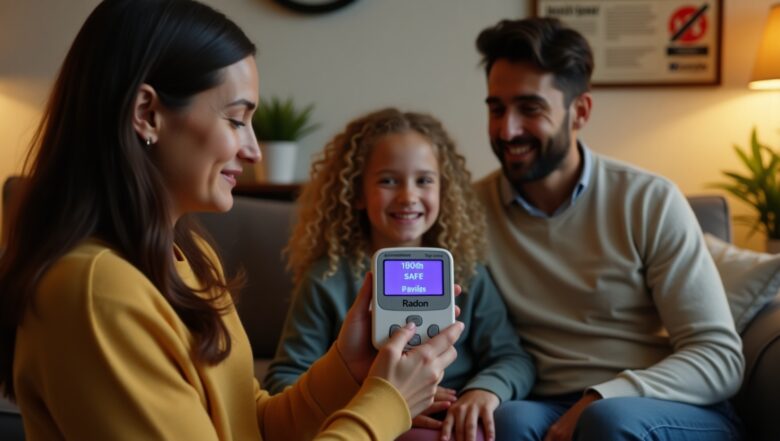
| Digital Monitor | Ion chamber or photodiode, continuous reading | 24 hrs initial, ongoing | $130-300 | Permanent monitoring |
| Smart Monitor | Digital + WiFi/Bluetooth, phone app, alerts | 1 hr initial, ongoing | $150-300 | Smart home integration |
5 Best Radon Detectors for 2026
1. Airthings View Plus — Best Overall Smart Monitor ($300)
The View Plus monitors radon, CO2, humidity, temperature, VOCs, pressure, and PM2.5 — seven sensors in one device. Radon readings update hourly. The e-ink display shows current levels without opening the app.
Pros: 7-in-1 air quality, WiFi (no hub needed), IFTTT integration, battery powered (no wiring), 2-year battery life
Cons: $300 is steep for radon-only use, first accurate reading takes 24 hours, no audible alarm
Smart home: Works with Alexa, Google Home, and IFTTT. No HomeKit support.
2. Ecosense RadonEye RD200 — Fastest Readings ($180)
The RD200 uses a pulsed ion chamber that delivers initial readings in 10 minutes — faster than any competitor. Hourly updates are accurate to within 10% after 24 hours. Bluetooth connection to the RadonEye app gives real-time charts.
Pros: 10-minute initial reading, most accurate consumer sensor, compact, phone alerts
Cons: Bluetooth only (no WiFi — must be within range), requires AC power, no additional air quality sensors
Best for: Real estate inspections, quick screening, basement monitoring
3. Airthings Corentium Home — Best Budget Digital ($130)
No app, no WiFi, no subscription — just a small battery-powered device with a digital display. Shows short-term and long-term radon averages. AAA batteries last 2+ years.
Pros: Simple, $130 entry price, portable, accurate long-term average, no connectivity needed
Cons: No phone alerts, no smart home integration, display-only (you have to physically check it)
Best for: People who want set-and-forget monitoring without apps or subscriptions
4. First Alert RD1 — Best Alarm-Based Detector ($45)
A simple plug-in detector with an 85dB alarm that sounds when radon exceeds a threshold. No app, no smart features — just an alarm when levels spike.
Pros: Cheapest continuous option, audible alarm, plug-in (no batteries to replace)
Cons: Less accurate than ion chamber sensors, no logging, no phone alerts, alarm-only (no display on some models)
Best for: Budget option for high-risk basements where you just want an alert
5. Air Things Short-Term Test Kit — Best First Step ($15)
A charcoal canister you leave in your lowest lived-in floor for 2-7 days, then mail to a lab. Results in 3-5 business days. If levels are above 4 pCi/L, then invest in a smart monitor.
Pros: $15, lab-verified accuracy, recommended by EPA as first step
Cons: One-time snapshot only, 1-2 week total turnaround, no ongoing monitoring
Radon Detector Comparison Table
| Model | Price | Sensors | Connectivity | Power | First Reading | Accuracy |
|---|---|---|---|---|---|---|
| Airthings View Plus | $300 | 7 (radon + air quality) | WiFi + Bluetooth | Battery (2 yr) | 24 hrs | ±10% after 7 days |
| Ecosense RD200 | $180 | 1 (radon only) | Bluetooth | AC plug | 10 min | ±10% after 24 hrs |
| Airthings Corentium | $130 | 1 (radon only) | None | AAA battery (2 yr) | 24 hrs | ±10% after 7 days |
| First Alert RD1 | $45 | 1 (radon only) | None | AC plug | 48 hrs | Moderate |
| Short-Term Kit | $15 | 1 (radon only) | Mail-in lab | N/A | 2-7 days + lab | Lab-verified |
EPA Radon Levels: What the Numbers Mean
| Radon Level (pCi/L) | EPA Recommendation | Action |
|---|---|---|
| Below 2 | Low risk | No action needed — retest every 2 years |
| 2 to 4 | Consider fixing | Optional mitigation, especially with long-term exposure |
| 4 and above | Fix your home | Install mitigation system ($800-2,500) |
| 8 and above | Urgent | Mitigate immediately — equivalent to smoking half a pack per day |
Radon Mitigation: What It Costs and How It Works
If your levels are above 4 pCi/L, a sub-slab depressurization system is the standard fix. A contractor drills through the basement floor, installs a PVC pipe, and attaches a fan that pulls radon from under the foundation and vents it above the roofline.
| Mitigation Type | Cost | Effectiveness | Maintenance |
|---|---|---|---|
| Sub-Slab Depressurization | $800-1,500 | Reduces 95-99% | Fan replacement every 5-10 years ($200) |
| Crawl Space Membrane | $1,500-3,000 | Reduces 90-95% | Inspect membrane annually |
| Sealing Cracks Only | $200-500 | Reduces 10-30% | Re-seal every few years |
| HRV/ERV Ventilation | $1,500-2,500 | Reduces 25-50% | Filter changes, annual servicing |
After mitigation, keep your smart monitor running to verify the system is working. Fan failures happen quietly — ongoing monitoring catches them before radon builds back up.
Where to Place Your Radon Detector
- Lowest lived-in floor — basement or ground floor (radon enters from soil below)
- Away from exterior walls, doors, windows — drafts skew readings
- Not in kitchens or bathrooms — humidity affects some sensors
- 2-6 feet off the floor — breathing zone height
- One per floor if you want comprehensive coverage
FAQ
How often should I test for radon?
With a short-term kit: test once, then retest every 2 years or after major home renovations (new cracks, foundation work). With a continuous monitor: it runs 24/7, so you always know your current levels. The EPA recommends retesting even after mitigation.
Do radon detectors work with home security systems?
Not directly. No home security system includes radon monitoring built in. However, the Airthings View Plus works with IFTTT, so you could trigger a smart siren or notification through your smart home setup if levels spike.
Is radon worse in certain regions?
Yes. The EPA maintains a radon zone map. Zone 1 (highest risk) includes most of the northern US, Appalachian region, and Rocky Mountain states. But high radon has been found in every state — testing is the only way to know your home’s levels regardless of zone.
Can I install radon mitigation myself?
Some homeowners DIY sub-slab systems for $300-500 in materials. It requires drilling through concrete, running PVC pipe through the house, and installing an inline fan. Most people hire a certified mitigator ($800-1,500) for the warranty and proper sizing. Either way, test afterwards to confirm levels dropped below 4 pCi/L.