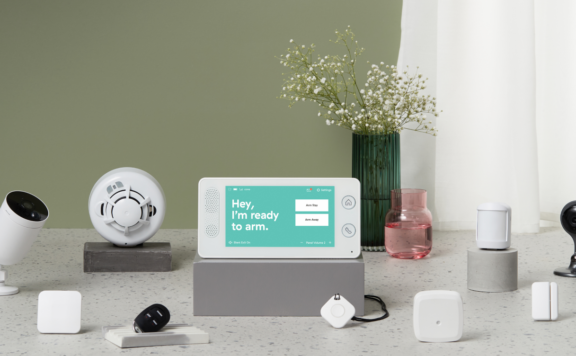
The Abode Motion Sensor is a dedicated indoor movement detector for an Abode security system. Abode currently describes a 110-degree field of view and up to 35 feet of detection range. Those figures are planning inputs, not proof of coverage in a particular room.
This is an editorial product review based on current Abode product and support pages. It is not a hands-on endurance test. Verify the exact model, hub, battery, mounting instructions, pet guidance, software, plan, and return terms before buying.
Abode Motion Sensor at a glance
| Area | Current role | Installed check |
|---|---|---|
| Primary job | Detect movement across an indoor field | Walk-test likely travel paths in every armed mode |
| Published field | 110-degree field of view and up to 35 feet | Map walls, furniture, stairs, heat, windows, pets, and dead zones |
| System dependency | Designed for an Abode system | Confirm exact hub, enrollment, firmware, and alarm-zone role |
| Mounting | Wall or corner placement | Use current instructions; check surface, height, angle, and tamper |
| Response | Can contribute to Abode alarm and notification workflows | Verify mode, delay, siren, monitoring, contact order, and restoration |
| Best use | Interior travel paths where an intruder is likely to cross the field | Avoid pointing at heat, direct sun, moving curtains, or routine pet paths |
What the sensor does
The current Abode Motion Sensor product page positions one device as whole-room or entryway movement coverage. The Abode support guide describes wall or corner mounting and false-alarm reduction. Read the exact installation instructions supplied with the model you receive.
A motion detector reports activity within its sensing design. It does not identify a person, prove forced entry, show which direction someone moved, or replace door/window sensors. Use perimeter contacts for the opening itself and motion for a second interior layer.
Best placement
Place the sensor where a person entering through a likely route must cross the sensing field rather than walk straight toward it. A corner facing a hallway, foyer, stair landing, or room transition can work better than a position aimed directly at one door.
- Follow Abode’s current mounting height and orientation instructions.
- Keep the field clear of tall furniture, open doors, plants, hanging fabric, and seasonal decorations.
- Avoid heating vents, fireplaces, radiators, bright windows, and rapid temperature changes.
- Do not aim through glass and assume the published range still applies.
- Keep the device indoors unless the exact model documentation states otherwise.
- Check that the battery cover and any tamper feature remain accessible.
Use our sensor adhesive mounting guide before placing tape on paint, glass, vinyl, metal, or textured walls.
Room-by-room fit
| Room | Possible placement | Main risk |
|---|---|---|
| Entry hall | Across the path from exterior doors toward living space | Sunlight, heating vent, coats, and a moving door blocking the field |
| Living room | Corner covering circulation, not a sofa alone | Pets, fireplace, windows, curtains, and ceiling fans |
| Basement | Across stairs or the route from a side entry | Humidity, temperature swings, stored objects, and low ceilings |
| Garage | Only if the model’s environmental limits support the space | Heat, cold, insects, vehicles, and an opening garage door |
| Bedroom hall | Across the hallway in Away mode | Night movement when Home mode should permit occupancy |
| Stair landing | Across the landing with a clear field | Pets on stairs, strong drafts, and blind spots below the sensor |
Armed modes and household movement
Decide which modes use the sensor. A hallway motion zone may be useful in Away mode but inappropriate in Home or night mode when people move between bedrooms and bathrooms. Test every household path before enabling a mode for routine use.
Label the zone in plain language, such as “first-floor hall motion.” During a monitoring call, a clear location is more useful than “sensor 12.”
Pets and false alarms
Do not assume one pet setting works for every animal, room, or mounting position. Weight, height, jumping, furniture access, stairs, curtains, heat, and multiple animals can change the result. Follow the exact current Abode guidance and run repeated tests without a live monitoring dispatch.
- Keep pet beds, climbing furniture, and shelves out of the strongest part of the field.
- Test at the times when sun and heating conditions change.
- Review every false alarm as an installation or operating signal, not just an annoyance.
- Do not disable the only useful interior layer without replacing its role.
Our false-alarm reduction checklist covers zones, pets, codes, cameras, contacts, and monitoring records.
Motion Sensor versus Multi Sensor
The dedicated Motion Sensor is for movement detection. The Abode Multi Sensor adds temperature, humidity, and light readings for automation and environmental context. More readings do not automatically make it a better intrusion sensor.
| Need | Better starting path |
|---|---|
| Simple interior alarm motion zone | Dedicated Motion Sensor |
| Motion plus temperature, humidity, and light automations | Multi Sensor, after exact alarm-role verification |
| Door or window opening | Contact sensor, not motion alone |
| Visual verification | Camera with privacy and recording review |
| Outdoor movement | Outdoor-rated device for the exact environment |
Hub, plan, and monitoring checks
The sensor belongs to an Abode system. Confirm compatibility with the exact hub and software before ordering. A Smart Security Kit is one current hub path; other hubs can differ.
Compare current Abode plans if professional monitoring, cellular backup, video, or other service-dependent functions matter. An app notification is not professional monitoring. A monitoring signal does not guarantee verification, dispatch, or an emergency outcome.
Alarm and response workflow
- The system is armed in a mode that includes the motion zone.
- Movement changes the sensor state under installed conditions.
- The hub applies the zone type, delay, and alarm rules.
- The siren, app, and monitoring paths act according to current settings and service.
- A household member or monitoring agent follows the account response plan.
Test each step. Do not infer monitoring receipt from a siren or app alert.
Automation ideas with boundaries
| Automation | Useful condition | Boundary |
|---|---|---|
| Entry light | Motion after dark while system is disarmed | Retain manual control; avoid startling occupants |
| Unexpected movement alert | Away mode plus direct motion event | Verify before assuming identity or intent |
| Quiet-hours lighting | Low-level light for an occupied hallway | Do not use a security alarm zone if routine movement is expected |
| Camera context | Motion requests a camera view or clip where supported | Respect privacy and keep video separate from direct alarm state |
Write the trigger, conditions, action, failure state, and owner for each rule. Test after time-zone, router, hub, firmware, room-layout, or household changes.
Battery and maintenance
- Use the battery type specified for the exact model.
- Record installation and replacement dates.
- Investigate repeated low-battery warnings instead of silencing them.
- Inspect mount, cover, lens, tamper, and field after cleaning or redecorating.
- Re-run the walk test after moving furniture, adding curtains, changing heating, or getting a pet.
- Dispose of batteries through an appropriate local path.
Failure behavior
| Failure | Question to test |
|---|---|
| Sensor battery low or dead | How quickly is the owner warned, and how does the zone appear? |
| Hub unavailable | Does the sensor create any local indication, and who learns of the failure? |
| Home internet down | Which alarm, cellular, monitoring, app, and automation functions continue? |
| Mains power down | How long does the hub run, and what status reaches the owner? |
| Sensor removed or covered | Does tamper or supervision report the condition? |
| Room changed | Did furniture, sun, HVAC, or pets create a blind spot or false-alarm path? |
60-minute Abode Motion Sensor acceptance test
- 0-10 minutes — enrollment: confirm exact model, hub, firmware/app version, zone name, battery, and tamper state.
- 10-20 minutes — field: walk likely entry and travel paths at slow and normal pace; mark blind spots.
- 20-30 minutes — modes: test Away, Home, and night behavior with household movement and entry delays.
- 30-40 minutes — false alarms: test pets, curtains, heating, sunlight, doors, and routine room activity without live dispatch.
- 40-50 minutes — response: place monitoring in test mode, create one authorized event, and confirm zone, siren, app, contact order, and restoration.
- 50-60 minutes — failures: follow safe instructions for internet or power loss, then confirm status, local alarm behavior, monitoring path, recovery, and fallback.
Record the results and retest after any room, mount, battery, hub, network, plan, firmware, or household change.
Verdict
The Abode Motion Sensor is a sensible second layer for an Abode household when a person must cross a defined interior route. Its published field is useful for planning, but value depends on placement, mode design, pet testing, false-alarm controls, hub compatibility, and a passed monitoring test.
FAQ
What range does Abode publish for the Motion Sensor?
The current product page describes a 110-degree field of view and up to 35 feet. Installed coverage can change with placement, walls, furniture, heat, pets, and room geometry.
Can the Motion Sensor replace door sensors?
No. A motion detector provides an interior movement layer. Door/window contacts report the opening itself and can support different armed-mode decisions.
Does it work with pets?
Check the exact current Abode guidance and test the installed room. Pet size, jumping, furniture, stairs, heat, and mounting can change false-alarm risk.
Does a motion alert call the police?
Not by itself. The sensor must be enrolled in a configured alarm zone, the system must be armed appropriately, and the current monitoring and response workflow must receive and handle the event.
Is this an outdoor sensor?
Do not install it outdoors unless the exact model documentation states that use and environmental rating. Use an outdoor-rated device for exterior conditions.