Last Updated: April 2026
Most break-ins succeed because of predictable, fixable vulnerabilities. The FBI reports 60% of burglaries are force-free — the burglar found an unlocked door, open window, or weak lock and walked straight in. This guide covers the 8 most common security gaps and specific fixes for each.
8 Most Common Home Security Vulnerabilities
1. Weak or Hollow-Core Doors
| Problem | Fix | Cost |
|---|---|---|
| Hollow-core door | Replace with solid wood or steel-core exterior door | $200-800 installed |
| Weak door frame | Add door frame reinforcement kit (StrikeMaster II) | $60-120 |
| 3/4-inch door screws | Replace strike plate screws with 3-inch screws into studs | $5 and 10 minutes |
2. Cheap Deadbolts
| Lock Grade | Resistance | Example |
|---|---|---|
| Grade 3 (avoid) | Fails under sustained attack | Most cheap builder locks |
| Grade 2 (minimum) | Residential grade | Kwikset SmartCode |
| Grade 1 (recommended) | Commercial grade — resists kick, bump, pick | Schlage Encode Plus |
For smart lock options, see our smart locks guide.
3. No Window Sensors on Ground Floor
23% of break-ins happen through windows. A contact sensor on every accessible window costs $15-30 each and installs in 2 minutes. Priority: all ground-floor windows, sliding patio doors, basement windows, windows hidden from street view.
4. No Outdoor Lighting on Vulnerable Sides
| Location | Recommended Light | Cost |
|---|---|---|
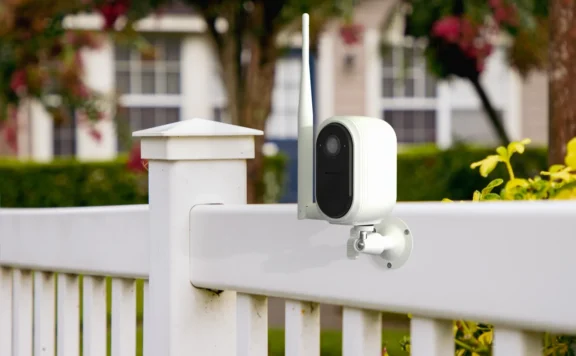
| Front door / driveway | Smart floodlight cam (Ring, Arlo) | $150-280 |
| Back door / patio | Motion-activated floodlight | $40-80 |
| Side yard / gate | Solar motion light | $20-40 |
| Garage | Smart garage sensor + light automation | $20-50 |
5. Unsecured Garage
Attached garages are the second most common entry point. Fixes: deadbolt the door between garage and house, never leave the remote in an unlocked car, add a smart garage controller (myQ) for remote locking.
6. Social Media Oversharing
78% of burglars use social media to identify unoccupied homes (University of Portsmouth). Post vacation photos after you return. Use occupancy simulation automations (Abode CUE / HomeKit) while away.
7. No Monitoring During Travel
| Monitoring Type | Response When Traveling | Cost |
|---|---|---|
| None | No response | $0 |
| Self-monitor | Alert to your phone — you call 911 | $0 |
| Professional | Monitoring center dispatches police/fire automatically | $6-20/mo |
Abode Connect at $6/mo is the cheapest professional monitoring available.
8. Wi-Fi-Only Cameras That Go Offline
If a burglar jams your Wi-Fi, Wi-Fi-only cameras stop recording. Fix: use a security system with cellular backup (Abode, SimpliSafe, Ring Pro). Use Z-Wave or Zigbee sensors — they communicate via RF, not Wi-Fi, and work even during outages. See our no-WiFi guide.
Vulnerability Checklist
| Check | Priority | Approx Cost |
|---|---|---|
| Solid-core exterior doors | Must-have | $200-800 |
| Grade 1 deadbolt on all exterior doors | Must-have | $80-300 |
| 3-inch strike plate screws | Must-have | $5 |
| Window sensors on all ground-floor windows | Must-have | $15-30 each |
| Motion lights on back door and side yards | Must-have | $40-80 each |
| Deadbolt on garage-to-house door | Recommended | $80-120 |
| Professional monitoring or cellular backup | Recommended | $6-20/mo |
| Smart occupancy simulation while away | Nice to have | Included with Abode CUE |
FAQ
What is the most common way burglars enter?
34% front door, 22% back door, 23% ground-floor windows, 9% garage. Sensors on all entry points matter more than cameras, which only record after entry.
Do security signs and stickers deter burglars?
Somewhat. 60% of burglars say visible cameras and real alarm systems are stronger deterrents than brand stickers. A real alarm matters more than a fake sign.
How long does a burglar spend before giving up?
Most opportunistic burglars abandon a target within 60 seconds if they encounter resistance — locked door, alarm sounds, motion lights activate. Immediate deterrents work.
Is a security system worth it in a safe neighborhood?
Yes. The FBI reports suburban areas have comparable property crime rates to urban areas when adjusted for density. 60% of burglaries occur in areas residents consider safe.