
SimpliSafe Review 2026: DIY Alarm, Monitoring, Cameras, Costs, and a 60-Minute Test
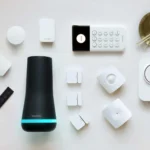
Short answer: SimpliSafe remains a straightforward DIY alarm choice for buyers who want direct door, window, and motion sensors, a keypad, optional cameras, and a current professional-monitoring path without an installer-led contract model. Its value depends on the exact package, plan, camera functions, and unpaid state offered at checkout—not an old price table.
This August 14, 2026 SimpliSafe review uses current official product, package, and plan information. It is source-based, not a claim that we installed and endurance-tested every current device. Promotions, service names, prices, and package contents change. Save the checkout configuration and terms before paying.
How this review makes a buying decision
This review does not award SimpliSafe a score for having the longest device list or the largest checkout discount. It tests whether a buyer can turn the current catalog into a documented security design. That means every exterior opening has an owner, every alert has a response, every camera has a privacy boundary, and the household knows what survives a power, internet, account, or subscription failure.
Start with a property sheet, not a package name. List exterior doors, accessible windows, interior travel routes, camera approaches, environmental risks, household users, guests, pets, and likely outages. Then map exact current devices and service functions to those jobs. If a discounted bundle leaves one critical opening uncovered, it is not a cheaper equivalent.
| Review question | Evidence to save | Reason |
|---|---|---|
| What detects intrusion? | Exact entry, motion, glass-break, or other sensor and named location | A camera notification is not direct opening state |
| What warns locally? | Base station, siren, keypad behavior, and delay settings | The home still needs an understandable local state |
| Who responds? | Household contact order, current monitoring path, permits, and safe test procedure | An alert without ownership can be ignored |
| What records evidence? | Exact camera, trigger, retention, plan, playback, export, and audio state | Live view, notification, recording, and export are different functions |
| What remains unpaid? | Written local alarm, app, history, recording, integration, and cellular states | Subscription value depends on the permanent fallback |
SimpliSafe strengths and trade-offs
Strength: the alarm-first model is easy to explain. Direct sensors, a base station, a keypad, a local warning path, an app, and optional monitoring form a clearer security chain than a camera-only bundle. The keypad also gives residents a shared control path when a phone is unavailable.
Trade-off: the ecosystem is proprietary. Buyers should verify the exact current function they need instead of assuming a broad compatibility statement applies to every device, plan, or automation. Camera recording, agent access, integrations, cellular behavior, and history can have different service dependencies.
Cost risk: promotions can make the first cart look cheaper than the permanent design. Compare three years of required hardware, monitoring, camera service, replacements, permits, batteries, connectivity, and exit costs at the same property scope.
Who should shortlist SimpliSafe?
- A renter or homeowner who wants an alarm-first DIY system with a keypad and direct sensors.
- A household willing to stay within one device ecosystem and verify current plan dependencies.
- A buyer who wants optional professional monitoring without treating a promotional bundle as the coverage plan.
Look elsewhere or compare closely when Apple Home integration is mandatory, the property needs a broader standards-based automation system, the buyer wants a different local-storage architecture, or a permanent unpaid feature is non-negotiable. Compare the exact requirement, not brand reputation.
SimpliSafe decision table
| Decision | What to verify |
|---|---|
| Security role | Base station, keypad, direct entry and motion sensors, local alarm, app, and optional monitoring |
| Installation | DIY by default; confirm whether paid help is offered at the address |
| Permanent unpaid state | Local alarm, app, camera, recording, smart-home, cellular, and history functions separately |
| Monitoring | Current plan, eligible devices, verification method, dispatch, permits, and cancellation |
| Cameras | Power, field of view, recording, privacy shutter or controls, plan dependency, and export |
| Best fit | A buyer who wants a simple alarm-first ecosystem and accepts proprietary hardware boundaries |
What SimpliSafe sells now
SimpliSafe’s current home security shop presents a system centred on a base station, wireless keypad, entry sensors, motion sensors, cameras, doorbells, and hazard or support devices. The exact catalog and promotion can change by visitor and date.
The current package page groups equipment into pre-built configurations, but a package name is not a coverage plan. Count the actual exterior doors, accessible windows, interior motion zones, camera approaches, smoke or carbon-monoxide duties, water risks, and panic locations. Add devices only after that property map is complete.
Do not carry forward a fixed kit price or sensor count from an older review. SimpliSafe runs frequent promotions and can change package content. Save a PDF or screenshot of the cart with every device, quantity, discount, renewal price, and return term.
Alarm architecture
SimpliSafe’s main strength is a clear alarm model. The base station owns the system state. Entry and motion sensors report direct events. The keypad gives household members a control path that does not require opening a phone. A local siren provides warning, while the app and selected service plan add remote or staffed response.
This is different from a camera-only setup. An entry sensor can report a protected door opening while armed even if no camera sees the person. A camera can add visual context, but it should not replace the door or window zone. Keep alarm detection and video evidence as separate jobs.
Monitoring plans: use the current support page
SimpliSafe’s official service-plan options page is the right starting point for current self-monitoring and professional-monitoring choices. Plan names, features, and prices can change, so this review does not freeze them into a table.
Before subscribing, record:
- Which alarm events are professionally monitored.
- Whether cellular backup is included and which equipment uses it.
- Which camera features require a plan.
- Whether an agent can view or speak through a supported camera during an alarm.
- How verification and dispatch work at the installation address.
- Whether local permits or false-alarm registration are required.
- How cancellation works and what remains afterward.
A plan should be judged by the permanent state it creates. If payment fails or the owner cancels, document which local alarm, app alert, remote control, recording, history, integration, and cellular functions remain. Do not rely on “works without a subscription” as one yes-or-no statement.
Equipment selection by property job
| Property job | Likely device type | Acceptance evidence |
|---|---|---|
| Exterior door | Entry sensor | Named zone, consistent open/closed state, correct delay |
| Accessible window | Entry sensor or suitable glass-break layer | Installed-state test without unsafe breakage |
| Interior route | Motion sensor | Normal walking detection and acceptable pet behavior |
| Front approach | Doorbell or exterior camera | Usable face before the person reaches the door |
| Indoor verification | Supported indoor camera | Privacy controls, plan state, and agent behavior verified |
| Water or environmental risk | Current compatible safety sensor | Local warning, app alert, and monitoring path tested |
Buy sensors for the property map, not the promotion. A discounted camera does not cover an unprotected basement window. An extra motion sensor does not replace a contact sensor on a door that needs an entry delay.
Entry sensors and motion detection
Name each sensor by physical location: “kitchen patio door,” not “sensor 4.” Test it with the opening used normally, the system in each relevant mode, and the door or window moving slowly and quickly. Record whether an entry delay, immediate alarm, or non-alarm notification is intended.
Place motion sensors around the travel path rather than aiming at heating vents, moving curtains, direct sunlight, or an active pet route. Marketing descriptions of pet behavior are not proof for a particular animal or room. Run repeated tests while the pet and household use the space normally.
Cameras and video verification
SimpliSafe’s current catalog includes camera options, but model and plan details change. For each camera, record power, network path, night behavior, field of view, recording trigger, retention, download process, microphone state, household access, and the feature state after a plan ends.
Agent-assisted video or live intervention can be valuable if it helps verify an alarm and speed the right response. It also expands the privacy boundary. Confirm which camera an agent may access, under what event, whether the agent can speak, what is recorded, and how the user disables or limits that function.
Place indoor cameras only where everyone with legitimate access understands the policy. Avoid bedrooms, bathrooms, and private household areas. Use our security camera privacy guide to document viewers, audio, activity zones, retention, and evidence export.
App, keypad, and household access
The keypad is one reason to choose an alarm-first system. It gives the household a shared, visible control surface. Still, every resident should understand the normal modes, entry delay, panic functions, false-alarm process, and what to do when the keypad or app is unavailable.
Use separate app users where supported. Do not share the primary password among family members, cleaners, contractors, or short-term guests. Enable multi-factor authentication and keep the recovery contact current. After a move, separation, or staff change, remove old users and sessions.
Smart-home compatibility
Do not buy SimpliSafe based on a general “works with smart home” claim. List the exact required action: arm status in a voice assistant, a lock integration, lighting on alarm, camera view, or an Apple Home accessory. Then find that exact current function in official documentation for the exact hardware and plan.
If Apple Home is mandatory, require current native support in writing before purchase. An unofficial bridge can add another computer, credential store, update cycle, and failure mode. Compare the system with SimpliSafe vs Eve for an alarm-versus-Apple-Home sensor decision.
Internet, power, and cellular failures
Do not treat backup as one feature. The base station, keypad, entry sensors, cameras, router, modem, phone, and monitoring path can each fail differently. Battery backup on the alarm does not keep a plug-in camera or home router online. Cellular backup may support selected alarm communications without carrying every camera function.
Run three controlled tests:
- Disconnect internet service while leaving local power and Wi-Fi active.
- Turn off the router while leaving the alarm powered.
- Remove normal power from the base station following safe instructions.
For each test, record direct sensor detection, local siren, keypad, app alert, camera recording, cellular path, monitoring response, fault notification, and recovery time. Tell the monitoring centre before any test that could generate a real dispatch.
Installation quality
Peel-and-stick hardware is easy to place, but adhesion, alignment, radio reach, and naming still determine reliability. Clean and dry mounting surfaces. Avoid installing a sensor where a door flexes or a window latch strikes it. Do not hide a base station where its siren cannot be heard or its radio path is blocked by metal and dense construction.
After installation, create a zone map with device name, location, battery, mount, date, intended mode, and test result. Photograph every final position. A future support call is faster when the owner knows which sensor “basement east window” means.
False alarms and dispatch readiness
False alarms often come from poor sensor alignment, motion placement, unclear entry delays, shared codes, or household confusion. Test every entry route with the people who use it. Put the keypad where an arriving user can reach it within the configured delay without running through a motion zone unexpectedly.
Ask the local authority or monitoring provider about permits and false-alarm rules. Save the monitored address, emergency contacts, call order, safe word, and keyholder details. Review them after a move or phone-number change.
Privacy and data ownership
Map what the system collects: alarm events, user activity, camera clips, audio, monitoring calls, device health, and location information. Record which account owns the data, which household users can view it, how long it is retained, and how it is deleted or exported.
Review third-party integrations and old devices regularly. A retired phone or former resident should not keep alarm or camera access. At service cancellation, export any evidence that must be retained, then delete data and users according to the household policy.
Three-year cost worksheet
Ignore the headline discount until the complete 36-month worksheet is built:
- Base station, keypads, entry sensors, motion sensors, sirens, cameras, doorbells, hazard sensors, and mounts.
- Professional installation or setup assistance where used.
- The current plan required for each desired monitoring, recording, cellular, or camera-agent feature.
- Battery replacements, camera charging, internet, permits, and false-alarm fees.
- Expected feature state after cancellation.
Use the normal non-promotional renewal price unless the offer guarantees a longer term. Compare equivalent coverage. A cheap starter kit with one door sensor is not less expensive than a complete system if the property requires eight openings and two cameras.
SimpliSafe versus Abode
SimpliSafe is the cleaner choice for a buyer who values a simple proprietary alarm path and a current monitoring or camera-agent feature that matches the address. Abode is the stronger comparison when native Apple Home support, broader home-automation radios, and a current no-plan or lower-plan operating state are required.
Review the current Abode Smart Security Kit and Abode plans using the same property map and 36-month worksheet. Do not compare brand claims; compare the exact permanent state, sensors, cameras, app, integrations, monitoring, and failures.
SimpliSafe versus camera-led systems
A camera-led platform can provide stronger video variety or local recording, but it may not create the same direct armed perimeter. Our SimpliSafe vs Netatmo comparison separates professional alarm monitoring from hardwired local outdoor video. If long-range or outbuilding sensors matter, Ring vs YoLink shows another way to divide alarm, camera, and remote-sensor jobs.
Who should choose SimpliSafe?
- A household that wants a straightforward base-station and keypad alarm.
- A renter or homeowner who prefers DIY setup and can mount sensors reliably.
- A buyer whose current regional plan provides the exact monitoring or video function required.
- A household willing to stay inside a proprietary sensor ecosystem.
Who should choose another system?
- A buyer who requires current native Apple Home support.
- A property that needs broad third-party Z-Wave, Zigbee, Matter, or advanced local automation support.
- A buyer who needs local camera storage or a specific camera format absent from the current catalog.
- A large or unusual property that fails the installed radio, siren, or coverage test.
60-minute SimpliSafe acceptance test
Run this before the return window closes. Notify the monitoring centre and household before any alarm test.
Minutes 0–10: inventory and permanent state
- List every device, quantity, location, battery, mount, and account owner.
- Record the plan, normal price, renewal, cancellation, and unpaid feature state.
- Confirm separate users and multi-factor authentication.
Minutes 10–20: perimeter and entry delay
- Arm the intended mode.
- Open the normal entry door and confirm zone name and delay.
- Open an immediate-alarm test zone under the approved procedure.
- Confirm local siren, keypad, app, and monitoring behavior.
Minutes 20–30: motion and household use
- Walk normal interior routes.
- Test with pets, curtains, heating, and lighting in ordinary states.
- Ask another user to arm and disarm without help.
Minutes 30–40: camera and evidence
- Trigger a supported camera event.
- Locate the clip and export it to a second device.
- Check timestamp, audio, viewer permissions, and plan dependency.
- Confirm any agent-access feature behaves as documented.
Minutes 40–50: outage test
- Disconnect internet service without creating an unsafe condition.
- Repeat one entry event.
- Record detection, local warning, cellular, app, camera, and monitoring separately.
- Restore service and measure recovery.
Minutes 50–60: response and return decision
- Follow the primary and backup responder procedure.
- Verify permits, address, contacts, safe word, and keyholder.
- Keep or return the system based on observed results, not promotion copy.
Verdict
SimpliSafe remains a credible DIY alarm choice when its current base-station, sensor, camera, and monitoring paths match the property. The old fixed-price argument is not dependable. Build the property map, save the current cart and plan, test the unpaid state, verify privacy and outage behavior, and decide from the installed 60-minute test.
Frequently asked questions
Can SimpliSafe work without professional monitoring?
SimpliSafe offers self-monitoring and professional-monitoring choices, but the exact local alarm, app, recording, history, cellular, and integration state differs. Check the current official plan page.
Does SimpliSafe require a long-term contract?
Current service is presented as flexible, but save and read the actual checkout and cancellation terms. Equipment financing, promotions, or third-party installation can have separate obligations.
Does SimpliSafe support Apple Home?
Do not assume native Apple Home support. Require the exact current device and function in official compatibility documentation before buying for an Apple Home household.
Are SimpliSafe cameras included with every monitoring plan?
No universal answer should be assumed. Camera recording, agent access, live view, history, and retention depend on the current camera and plan. Verify each required function.
Is SimpliSafe better than Abode?
SimpliSafe can be the better fit for a simple proprietary alarm and a desired current monitoring feature. Abode can be the better fit for Apple Home, broader automation radios, and a different no-plan or paid-plan state. Compare identical property coverage.
Latest News

SimpliSafe vs Alder Security 2026: DIY Equipment, Monitoring, Contracts, Cameras, and 3-Year Cost
SimpliSafe vs Alder Security compared on pricing, contracts, equipment, monitoring, and 3-year total cost. SimpliSafe: $200 upfront, $0-28/mo, no contract. Alder: $0 upfront but 3-5 year lock-in at $3...

Cove vs SimpliSafe 2026: Budget DIY Monitoring Compared
Cove charges $17.99-27.99/mo with no free tier — you must pay to use the system at all. SimpliSafe has a free self-monitoring tier but charges $18-28/mo for pro monitoring. 3-year total: Cove runs $64...
SimpliSafe Video Doorbell Pro Review 2026 Update: Equipment, Monitoring, Cameras, and Cost
The SimpliSafe Video Doorbell Pro ($170) shoots sharp 1080p HDR with a 164° wide-angle lens — solid hardware at a fair price. But it only works inside the SimpliSafe app. No Alexa live view, no Google...
SimpliSafe Review 2026: Equipment, Monitoring Plans, Cameras, Smart Home, and 3-Year Cost
SimpliSafe is a popular choice for no-contract, easy DIY setup, and affordable home security.